Kayron Chip
I Now Ask AI to Fight My Decisions. Here is Why.
Most people ask AI for an answer. The ones who stay ahead ask it to challenge them instead. Here's how to stop outsourcing your judgment.
·6 min read
AI has commoditized content, code, and design. When everyone can produce gold, the question is no longer whether you can produce it — it's what only you can produce.
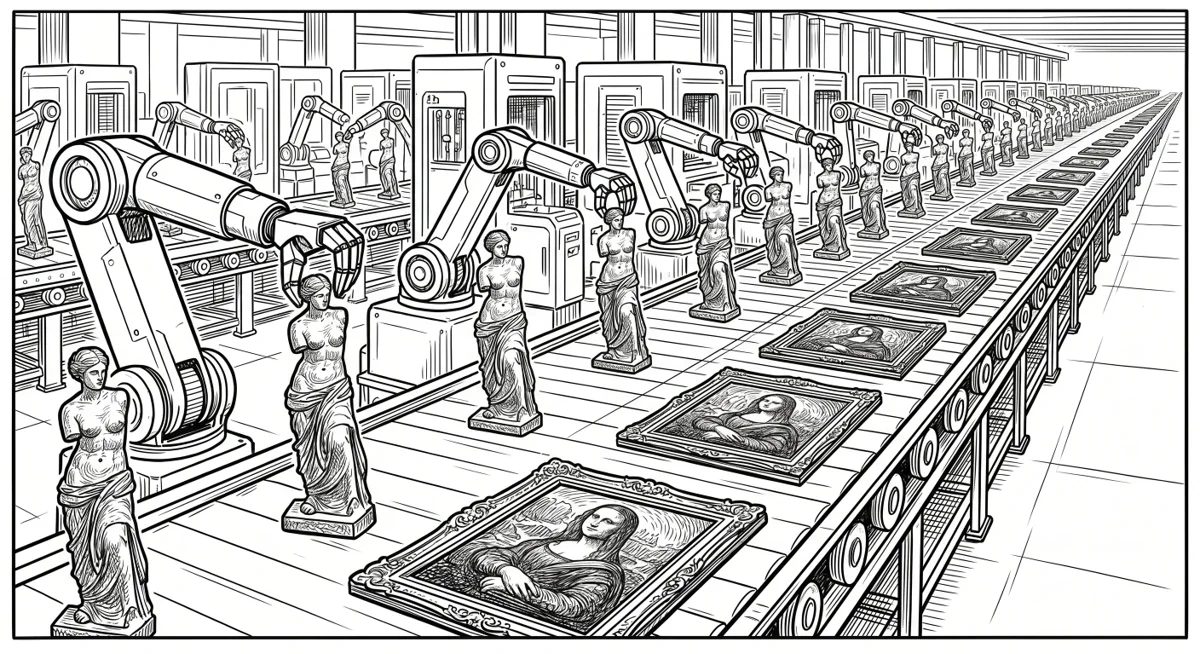
You’ve heard the story of Midas.
A king so obsessed with wealth that he begged the gods for the golden touch. Gods granted it and everything turned to gold at his touch.
Now imagine everyone around Midas had the same power. Everyone could create gold at will.
Gold would stop meaning anything.
That’s what’s happening with AI sector by sector.
It touched content. Everyone can now publish. Everyone can scale output 10x. The whole content layer deflated.
It touched code. Everyone can build an MVP. Everyone can write a service. The whole SaaS deflated.
It touched design. Every non-designer can ship polished work. Every startup skips a designer. The whole design market compressed.
Two years ago, a well-researched article took days. A polished draft took hours. A competitive analysis could take a week. These required real skill, knowledge, and capability. If you were good, you stood out.
Today, anyone with a $20 subscription can produce almost the same outputs.
Skill, knowledge, and capability have been commoditized.
And like any commodity, the output is becoming indistinguishable. The founder, the consultant, the student, the agency — everyone is producing gold at the same rate.
So the question is no longer: “Can you produce it?”
It’s: “What can you produce that no one else can produce?”
And the threshold for what counts as meaningfully different has itself risen — you now need to be dramatically different, not just incrementally, to stand out.
That means learning to use AI in a way that makes the output uniquely you: your perspective, your experience, your taste.
That’s not commoditized. It can’t be.
Three practices you can build into your workflow today to make sure the output stays uniquely you. I call it the BDA framework — Before, During, After.
BEFORE: Define before you prompt
Before opening AI, write down your own view of the problem. What is the question? What do you think the answer is? What would you do? This takes five minutes. It also means AI is responding to your thinking rather than replacing it. The difference in output quality is significant. More importantly, the difference in how much you learn from the interaction is significant.
DURING: Write your points first, then ask AI to improve
For any document or communication, start by writing the salient points yourself — rough, incomplete, unpolished. Then hand those to AI for refinement. You are still doing the generative work. AI is handling execution. The cognitive reps happen where they should.
AFTER: Run a challenge session after you create
Once you have produced something with AI assistance, open a new session and ask AI to argue against it. Push back on the reasoning. Find the weaknesses. Then defend your position. This does two things: it deepens your understanding of what you actually built, and it forces you to engage with the work rather than just ship it.
AI can copy the look of gold. It can’t replicate the weight.
Is taste something you build, or something you have?
One view: taste is earned through exposure, imitation, study, and years of deliberate practice. It compounds slowly and can’t be shortcut.
The other: taste is instinct refined by experience. Some people develop it faster than others because they were wired for it. Practice sharpens it but doesn’t create it.
Which side are you on?
One idea, one framework, one skill per week on using AI to think more clearly, decide better, and stay creative.
Kayron Chip
Most people ask AI for an answer. The ones who stay ahead ask it to challenge them instead. Here's how to stop outsourcing your judgment.
Kayron Chip
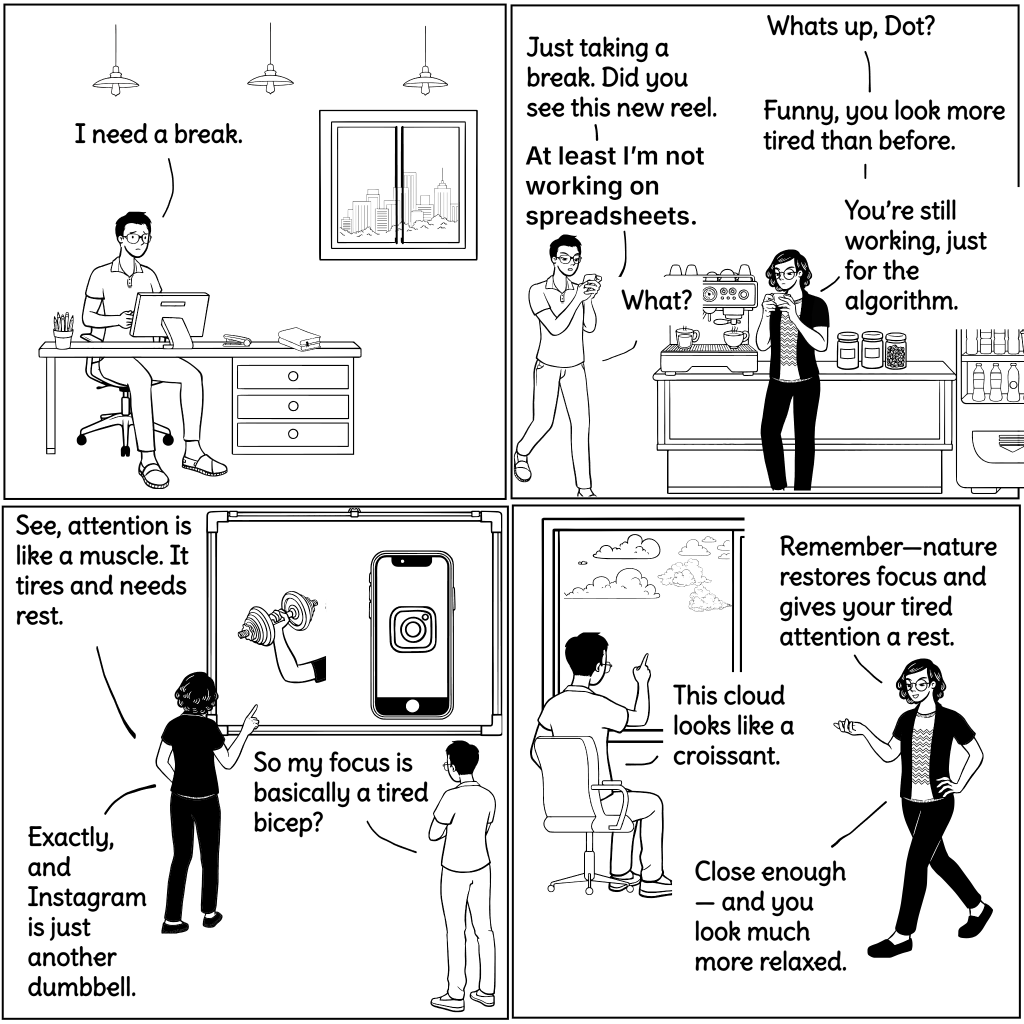
Most breaks leave you drained because they’re not real recovery—they’re just another form of work. Learn the science behind true rest, Attention Restoration Theory, and a 10-minute micro-rest protocol to recharge your focus.
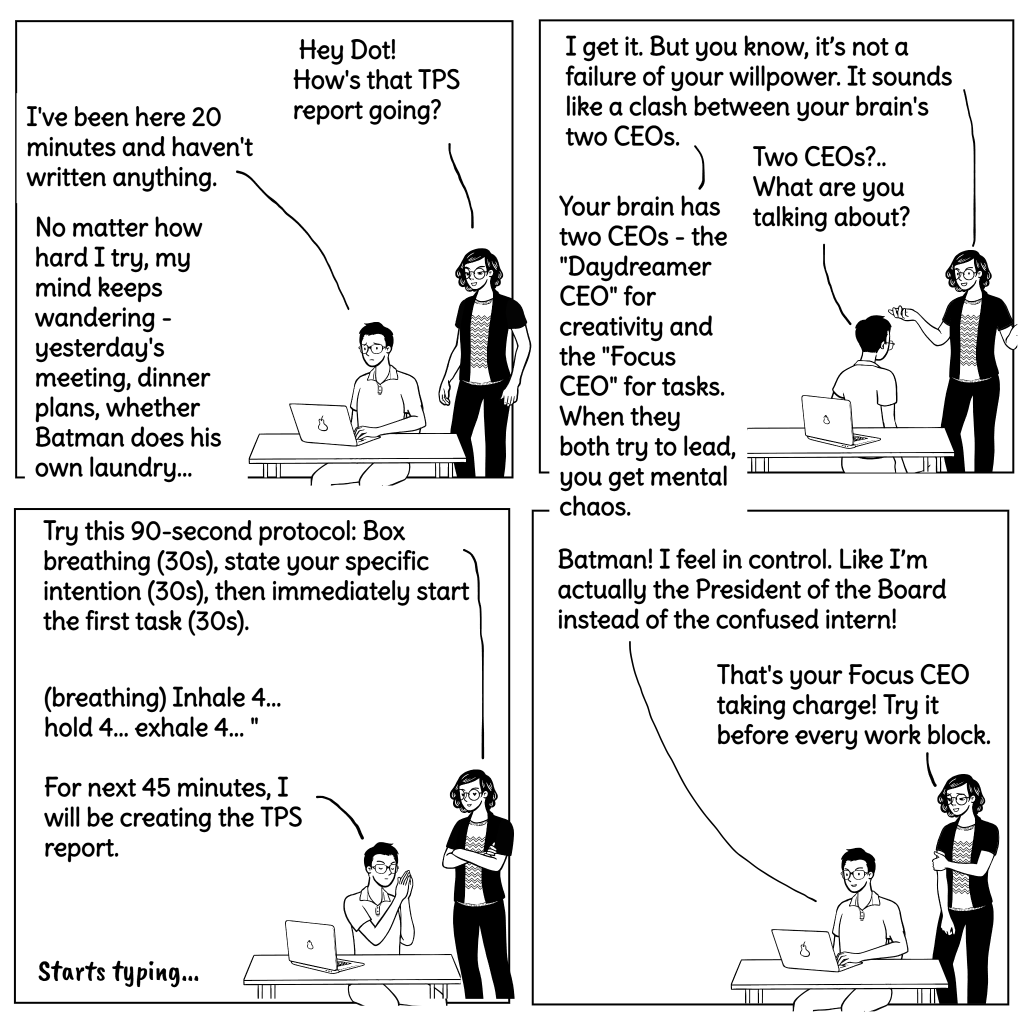
Kayron Chip
Why is focus so slippery, even when you’re motivated? Under stress, your brain’s default mode network keeps up internal chatter that drowns out goal-directed attention. This piece shares a willpower-free, 90-second reset—box breathing (4-4-4), one clear intention, and an immediate first action—to quiet the noise and flip into deep work on cue.